Greta Jung · 4 October 2026
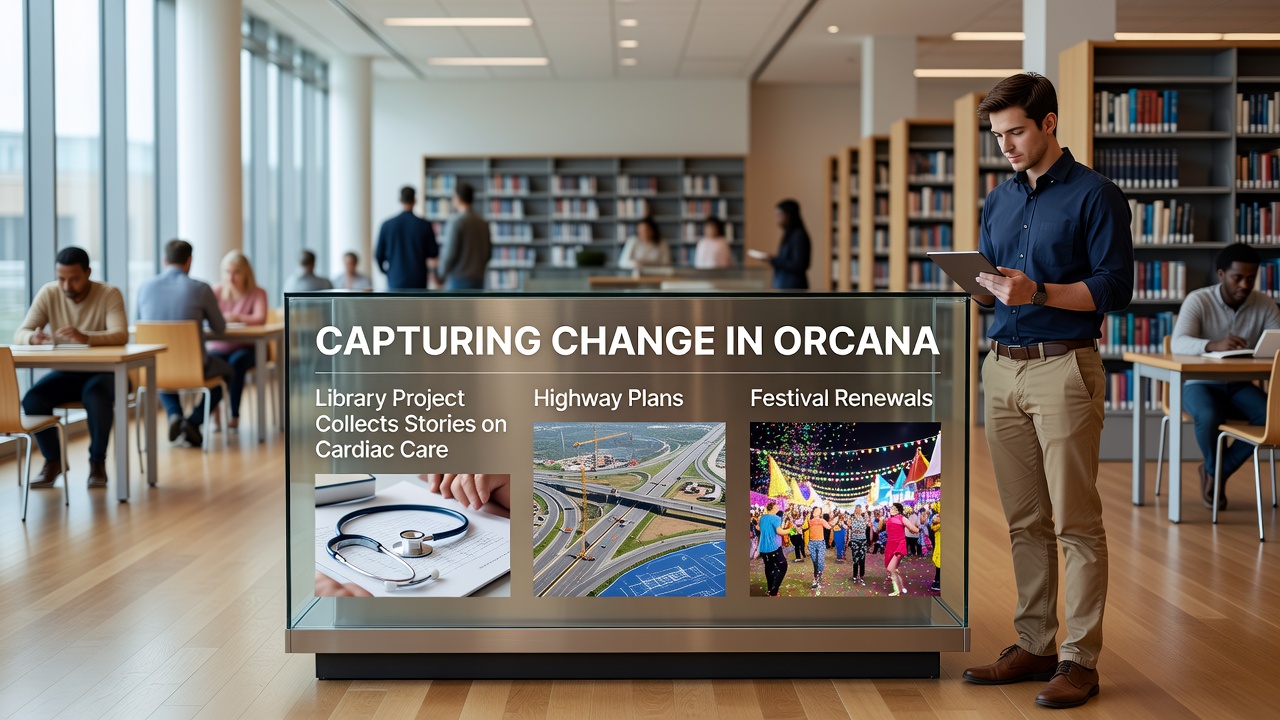
Capturing Change in Orcana: Library Project Collects Stories on Cardiac Care, Highway Plans, and Festival Renewals
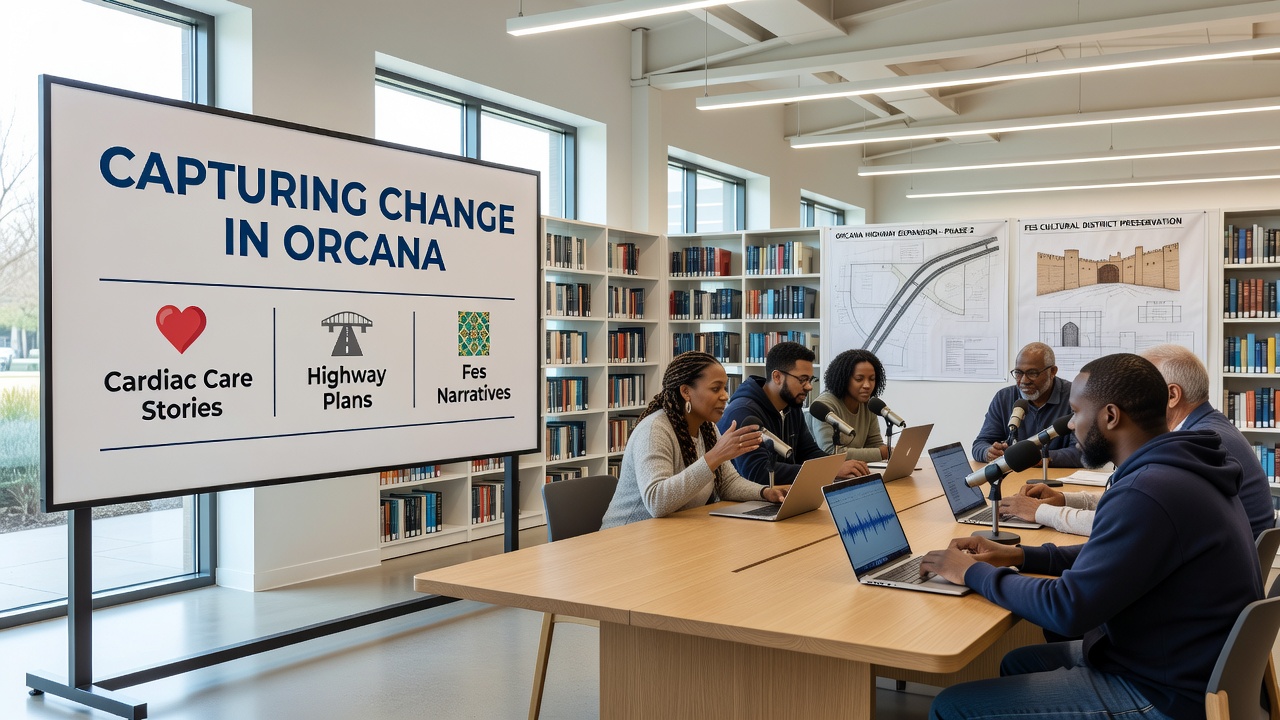
Residents across Orcana have begun contributing personal accounts to a new library initiative that documents shifts in cardiac care services, proposed highway developments, and the renewal of annual festivals, with the project expanding its reach through October 2026 community workshops. The effort organizes narratives into thematic collections that highlight how medical facilities have adapted treatment protocols, how transportation routes continue to evolve under regional planning guidelines, and how cultural events have resumed with updated safety measures following earlier disruptions.
Documenting Cardiac Care Developments
Stories submitted so far detail changes at local clinics where staff introduced new monitoring equipment and expanded outpatient programs, allowing patients to track heart conditions through remote consultations rather than frequent in-person visits. One account describes a family's experience with updated rehabilitation schedules that incorporated community support groups, while another outlines adjustments in emergency response times after equipment upgrades at the central medical center. Data from health organizations indicate that similar adaptations in cardiac services have occurred in multiple regions, with the American Heart Association reporting increased use of telehealth options across North American facilities in recent years.
Library coordinators have paired these narratives with public records on funding allocations for cardiac units, creating displays that show both personal impacts and broader policy adjustments. Participants note how access to specialized care has shifted for rural households, prompting discussions on transportation barriers that connect directly to the project's highway section.
Highway Plans Through Resident Perspectives
Highway planning narratives focus on route adjustments and their effects on daily commutes, with contributors describing how preliminary surveys have identified areas for potential widening and safety enhancements. Accounts from business owners along proposed corridors explain changes in delivery schedules and customer access, while families share observations about noise levels and property values near planned expansions. These stories integrate with official maps from transport authorities, allowing readers to compare individual experiences against engineering timelines set for the coming decade.
Observers note that such collections help clarify how infrastructure decisions intersect with healthcare access, since improved roads could shorten travel to specialized cardiac facilities. The project avoids overlap with prior port-related discussions by emphasizing surface route modifications instead.
Festival Renewals and Community Gatherings
Festival renewal accounts capture the return of events such as seasonal music gatherings and harvest celebrations, with organizers detailing new vendor layouts and attendance caps introduced to align with current public health standards. Contributors recount how participation numbers have rebounded through hybrid formats that combine in-person activities with live streams, and several entries highlight volunteer efforts to preserve traditional elements while incorporating modern accessibility features. Research from European cultural agencies shows comparable renewal patterns in community events across multiple countries, where digital integration has sustained engagement during transition periods.
These narratives link to the cardiac care and highway themes by exploring how event locations have moved to venues with better road connections and emergency medical support. Library staff have compiled timelines that trace festival schedules from earlier cancellations through the phased reopenings documented in October 2026 submissions.
Integration and Public Access
The library maintains an online archive where users can search stories by theme or location, and physical exhibits rotate through branch locations to reach wider audiences. Workshops scheduled through the end of 2026 invite additional submissions, with facilitators providing guidance on recording oral histories that maintain factual accuracy alongside personal detail. Cross-references between sections encourage readers to trace connections, such as how improved highway access might support both festival attendance and quicker cardiac response times.
Conclusion
Through structured collection of these accounts, the Orcana library project creates a record that connects individual experiences with documented developments in healthcare, transportation, and cultural programming. The initiative continues to accept contributions, building a resource that reflects ongoing adjustments across the region as of October 2026.