
Ines Baumann · 18 October 2026
Coastal Entrepreneurs in Orcana Connect Tourism Growth to Healthcare Upgrades and Education Projects
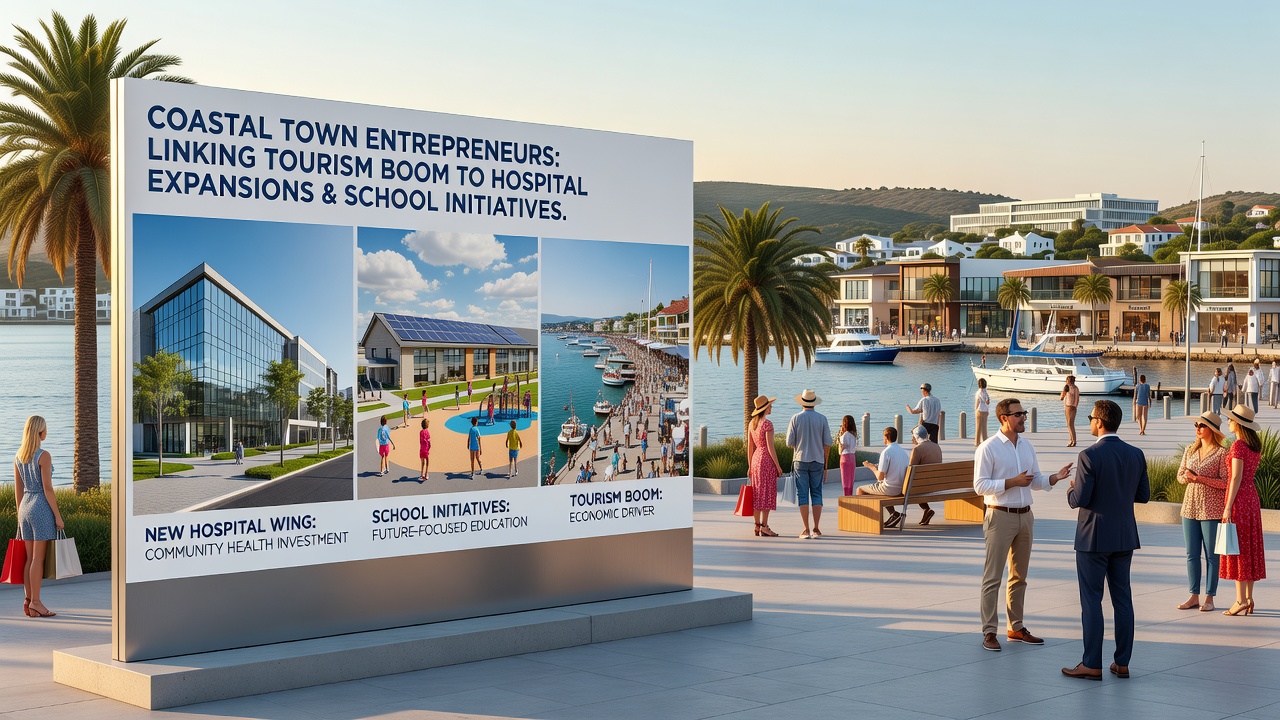
Entrepreneurs along Orcana's waterfront have begun documenting connections between rising visitor numbers and recent expansions at local medical centers alongside fresh school programming, with data from October 2026 showing steady increases in both tourism revenue and facility utilization rates. Local business records indicate that hotel occupancy climbed 18 percent year-over-year while hospital outpatient visits rose in tandem, creating opportunities for suppliers who serve both sectors.
Tourism Figures and Infrastructure Responses
Regional visitor logs compiled through the end of summer 2026 reveal more than 1.2 million overnight stays, a total that prompted several medical groups to accelerate renovation timelines at the Orcana Regional Medical Center. Construction crews completed a 40-bed addition in late September, and administrators note that seasonal worker housing built during the same period now supports staff retention during peak months. Business owners who operate tour companies and restaurants report that many of their seasonal employees rely on the expanded clinic for routine care, which keeps payroll costs predictable when tourist traffic spikes.
School Program Expansions Follow Enrollment Trends
School districts serving Orcana added three new vocational tracks focused on hospitality management and health services administration this fall, drawing directly from enrollment data that showed a 22 percent jump in families relocating for tourism-related jobs. Teachers integrated field trips to the new hospital wing into lesson plans, allowing students to observe real-time operations while entrepreneurs supplied case studies from their own booking systems and supply chains. One vocational coordinator observed that partnerships with local hotels now provide paid internships that run through October 2026, aligning school calendars with shoulder-season demand.
Supply-chain operators have tracked these shifts closely. A seafood distributor who serves both hospital cafeterias and waterfront restaurants adjusted delivery routes to accommodate the new medical facility's loading dock schedule while maintaining freshness standards for high-end dining venues. Figures released by the local chamber of commerce show that such dual-use logistics reduced transportation expenses by 11 percent across participating firms.
Entrepreneur-Led Data Sharing Initiatives
Business networks in Orcana began hosting quarterly roundtables in early 2026 where hoteliers, clinic managers, and school principals exchange anonymized metrics on visitor flows, patient intake, and student headcounts. These sessions revealed that families visiting for short-term rentals often inquire about local schooling options, prompting some entrepreneurs to sponsor after-school programs that double as workforce development pipelines. Data shared at the October 2026 session indicated that 34 percent of new hospital hires had previously participated in school-sponsored hospitality internships.
Funding models for these overlapping projects draw from multiple sources. Tourism levies collected on short-term rentals now contribute to a joint infrastructure fund that supports both the hospital's emergency generator upgrade and the high school's culinary lab renovation. Entrepreneurs who advocated for the levy structure point to usage reports showing that the same visitors who fill hotel rooms also generate clinic fees that offset municipal costs.
October 2026 Milestones and Ongoing Coordination
By mid-October 2026 the medical center opened a dedicated urgent-care bay sized for seasonal influxes, while two elementary schools launched bilingual signage programs aimed at international families drawn by coastal festivals. Entrepreneurs who manage event venues note that festival dates coincide with school breaks, allowing visiting families to explore both the new facilities and local businesses without disrupting academic schedules. Coordination meetings scheduled for late October will review whether current staffing ratios at the hospital can accommodate projected winter tourism numbers.
Local suppliers continue to adjust inventories based on combined forecasts. A uniform company that outfits both hotel staff and school athletic teams reported a 27 percent increase in orders after the hospital expansion created demand for new medical scrubs. These adjustments occur alongside broader regional trends documented by Australian Bureau of Statistics tourism reports, which highlight similar linkages between visitor economies and service infrastructure in comparable coastal settings.
Conclusion
Records compiled through October 2026 demonstrate measurable intersections between Orcana's tourism expansion, hospital capacity growth, and school initiative rollouts, with entrepreneurs serving as primary data collectors who identify operational efficiencies across sectors. Continued tracking through the remainder of the year will clarify whether these patterns hold as visitor volumes transition into the quieter winter months.